
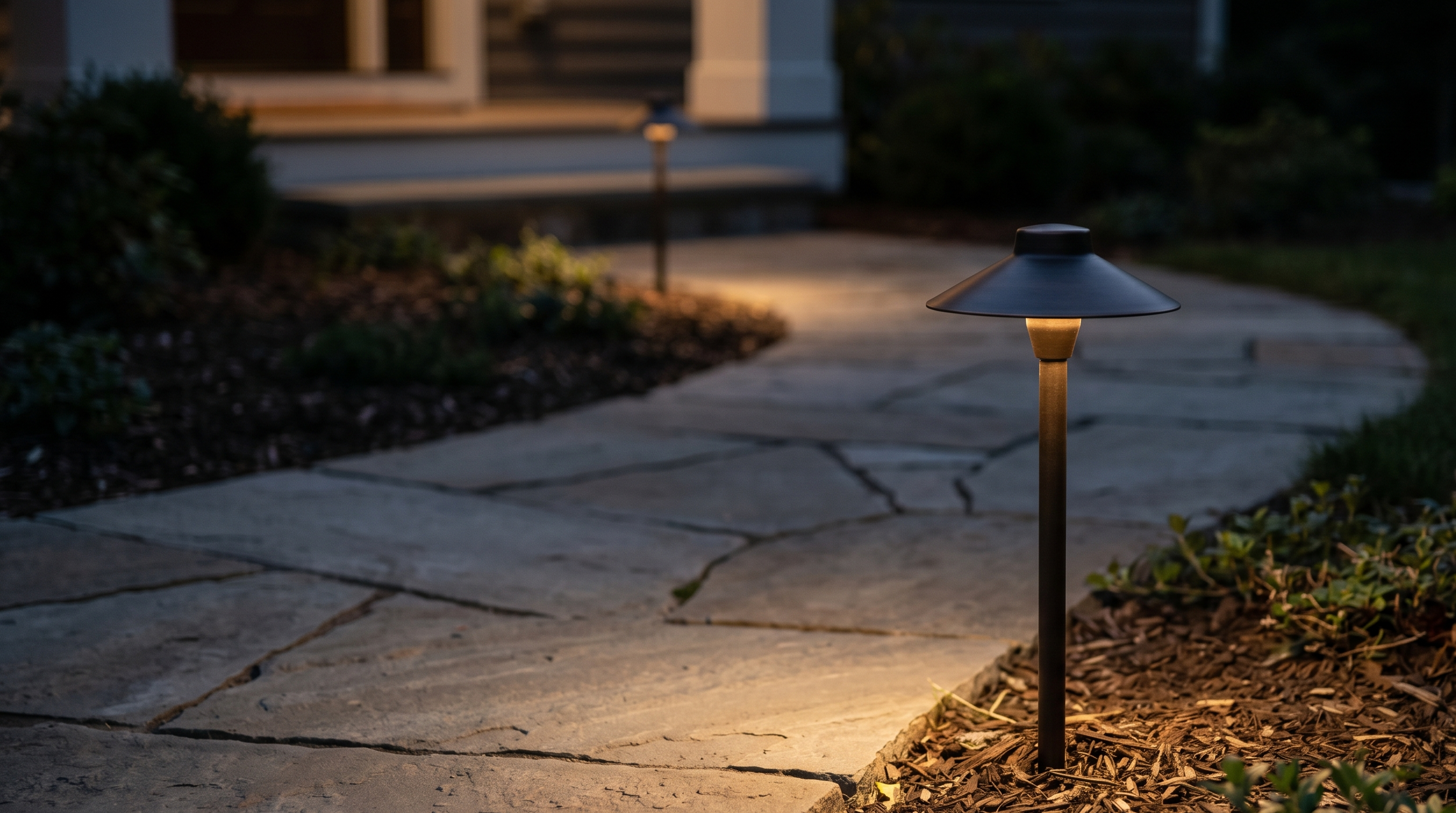
Most people think about outdoor lighting as a way to make their home look better. And it does. But there is a practical side to it that does not get talked about enough: safety.
Every year, thousands of people are injured in slip and fall accidents on residential properties. Many of these happen at night, on paths, steps, and walkways that are perfectly safe during the day but become hazards after dark. A step you cannot see. A curb you forgot was there. A change in surface from concrete to flagstone that is invisible without light.
Pathway lighting is one of the simplest and most effective ways to reduce these risks on your property. Here is where the hazards are, why they matter, and how the right lighting eliminates them.
Why Darkness Creates Danger on Your Property
Your brain processes an enormous amount of visual information when you walk. It constantly calculates the height of the next step, the angle of the ground, the edge of the path, and the distance to obstacles. You do this without thinking about it because your eyes feed your brain everything it needs.
Take away the light, and that system breaks down. Your brain starts guessing. Your foot placement becomes less precise. Your reaction time to unexpected changes in the ground slows down because you do not see them coming.
This is not just a problem for elderly visitors or young children, though they are at higher risk. Anyone walking through an unlit yard at night is more likely to stumble, misstep, or lose their footing than they would during the day.
The solution is not floodlights or motion-activated security lights that blast the yard with harsh white light. The solution is well placed, warm, low-level lighting that illuminates the ground where people walk. That is exactly what pathway lighting does.
The Five Most Dangerous Spots on Your Property at Night
Not every inch of your yard needs to be lit. But certain areas are significantly more hazardous than others after dark. These are the spots where pathway lighting makes the biggest difference.
1. Steps and Stairs
Any change in elevation is a fall risk in the dark. Front porch steps, deck stairs, garden steps between terraced levels, and the step down from a patio to the lawn are all places where people trip when they cannot see the edge.
The problem is not just that the step exists. It is that the step blends into its surroundings without light. A dark gray stone step against dark mulch or dark grass becomes nearly invisible.
Lights placed at the top and bottom of any set of steps make the height change obvious. For longer flights, adding a light at the midpoint or integrating step lights into the risers themselves provides continuous visibility.
2. Path Edges and Borders
Many walkways are bordered by a different material. Pavers next to gravel. Concrete next to mulch. Flagstone next to lawn. During the day, these borders are easy to see. At night, they disappear.
When you cannot see the edge of the path, you are more likely to step off it. Stepping from a solid surface onto soft or uneven ground unexpectedly is one of the most common causes of ankle rolls and falls.
Path lights positioned along the edges define the boundaries of the walkway and keep feet where they belong.
3. Surface Transitions
Even on a flat path, a change in surface material can be a tripping hazard if you do not see it coming. The transition from a smooth concrete driveway to a brick or flagstone walkway creates a subtle lip that catches toes. A section of path that changes from dry pavement to wet stone becomes slippery without warning.
Lighting these transition points makes the change obvious before you reach it. Your brain has time to adjust your stride and foot placement, which is all it takes to prevent a stumble.
4. Intersections and Forks
Where two paths meet, or where a walkway forks in two directions, people pause and change direction. That moment of hesitation is when falls happen, especially if the intersection is dark and the person is not sure which way to go.
A fixture placed at path intersections serves two purposes. It illuminates the ground at the turning point, and it acts as a wayfinding element that tells visitors where the path goes next.
5. Slopes and Uneven Ground
Not every path is flat. Side yards often slope. Garden paths follow the natural grade of the land. Flagstone walkways can have slightly uneven surfaces where stones settle at different rates.
On flat, even ground, a small stumble is easy to recover from. On a slope or uneven surface, the same stumble can turn into a fall because your body is already off balance from the grade. Lighting these sections gives your eyes the information they need to navigate the terrain safely.
How Pathway Lighting Prevents Falls
Pathway lighting works because it provides just enough light at ground level to let your eyes do their job. It does not need to be bright. It just needs to be consistent and well placed.
Continuous Coverage Without Dark Gaps
The most important thing is avoiding dark patches between fixtures. A well lit section followed by a dark section followed by another well lit section actually makes things worse because your eyes have to constantly adjust between light and dark. Those adjustment moments are when you are most vulnerable.
Proper spacing, typically 8 to 10 feet between fixtures, ensures overlapping pools of light that create a continuous glow along the entire path. You never step from light into darkness.
Warm Color Temperature
Warm light in the 2700K range is easier on the eyes at night than cool white light. It allows your pupils to stay relatively relaxed, which gives you better peripheral vision and depth perception. Cool, bluish light causes your pupils to constrict, which narrows your field of vision and makes it harder to see obstacles at the edges of the path.
This is why professional landscape lighting uses warm LEDs rather than the bright white lights you see in commercial parking lots. The warm glow is safer, more comfortable, and more attractive.
Downward-Directed Light
Good path fixtures direct their light downward onto the walking surface rather than outward into your eyes. Glare from a poorly designed or poorly aimed fixture is almost as bad as darkness because it blinds you temporarily and makes the ground around the light harder to see.
Quality path light fixtures use shielded or hooded designs that contain the light and focus it where it is needed: on the ground at your feet.
Who Benefits Most From Pathway Lighting
Everyone who walks on your property at night benefits from pathway lighting. But some groups are especially vulnerable to fall injuries and benefit the most from a well lit yard.
Older Adults
Adults over 65 are the most likely age group to suffer serious injuries from falls, including fractures, head injuries, and hospitalizations. Reduced vision, slower reflexes, and balance changes all contribute to higher fall risk. Good lighting does not eliminate these factors, but it removes one of the biggest environmental contributors: poor visibility.
If you have elderly parents, in-laws, or neighbors who visit your home regularly, pathway lighting is a meaningful safety upgrade.
Children
Kids move fast and do not always pay attention to where their feet are going. A dark yard with steps, edges, and surface changes is a recipe for scraped knees and worse. Pathway lighting makes the hazards visible even when the kids are not watching for them.
Party and Event Guests
When you host a gathering, your guests are walking through a property they do not know well. They are not familiar with the step down from the patio, the curve in the walkway, or the lip where the driveway meets the front path. They may also be carrying plates, drinks, or children.
Pathway lighting makes your property navigable for people who have never been there before. It is one of the best things you can do as a host to make sure everyone gets from their car to the front door and back again safely.
Liability and Homeowner Responsibility
This is a topic no one enjoys thinking about, but it matters. As a homeowner, you have a legal responsibility to maintain reasonably safe conditions on your property. If a guest, delivery person, or anyone else is injured on your property because of a hazard that you could have addressed, you may be held liable.
Dark walkways, unlit steps, and invisible path edges are all conditions that a court could view as preventable hazards. Installing pathway lighting does not guarantee protection from liability, but it demonstrates that you took reasonable steps to make your property safe.
This is not legal advice, and every situation is different. But it is worth considering that pathway lighting is not just an aesthetic choice. It is a practical measure that reduces real risk.
Pathway Lighting as Part of a Complete Safety Plan
Pathway lighting works best when it is part of a broader approach to outdoor safety. A few additional steps that complement it include keeping paths clear of debris, leaves, and ice during winter months. Trimming back plants that encroach on walkways. Repairing cracked or uneven pavement. And making sure handrails on steps are secure.
The lighting handles visibility. The maintenance handles the physical conditions. Together, they create a property that is genuinely safe to walk through after dark, not just for you, but for everyone who visits.
Light the Paths That Matter Most
You do not need to light every square foot of your yard to make a difference. Focus on the paths people actually use: the front walkway, the route from the driveway to the door, the back door to the patio, and any steps or elevation changes along the way.
At Serenity Outdoor Lighting, we design pathway lighting as part of a complete plan for your property. Safety and aesthetics are not competing goals. The same lights that keep your paths safe also make your home look warm and welcoming.
If you want to see how pathway lighting would work on your property, request a free quote or contact us to schedule a walkthrough. We will identify the areas that need attention and put together a plan that covers them.
